The top floor of iconic Villa Sixta in Otrobanda is available for rent. This charming and highly functional office space at Hoogstraat 25 is suitable for an organization requiring approximately nine to fifteen workstations. Its flexible layout can also accommodate other commercial uses, including meeting or training rooms, a gallery, studio, or showroom.
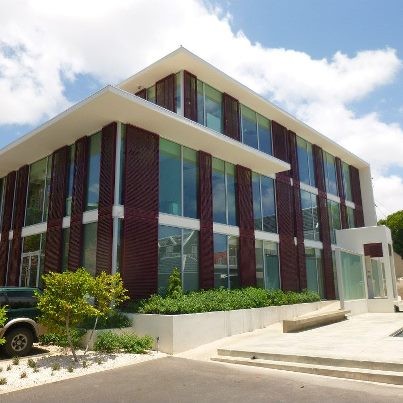
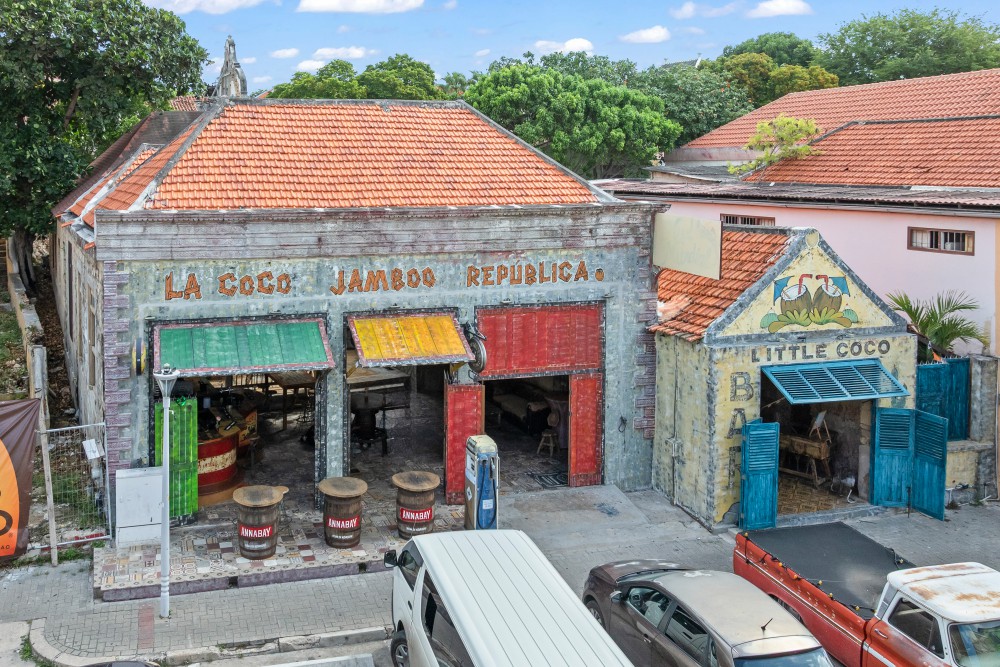
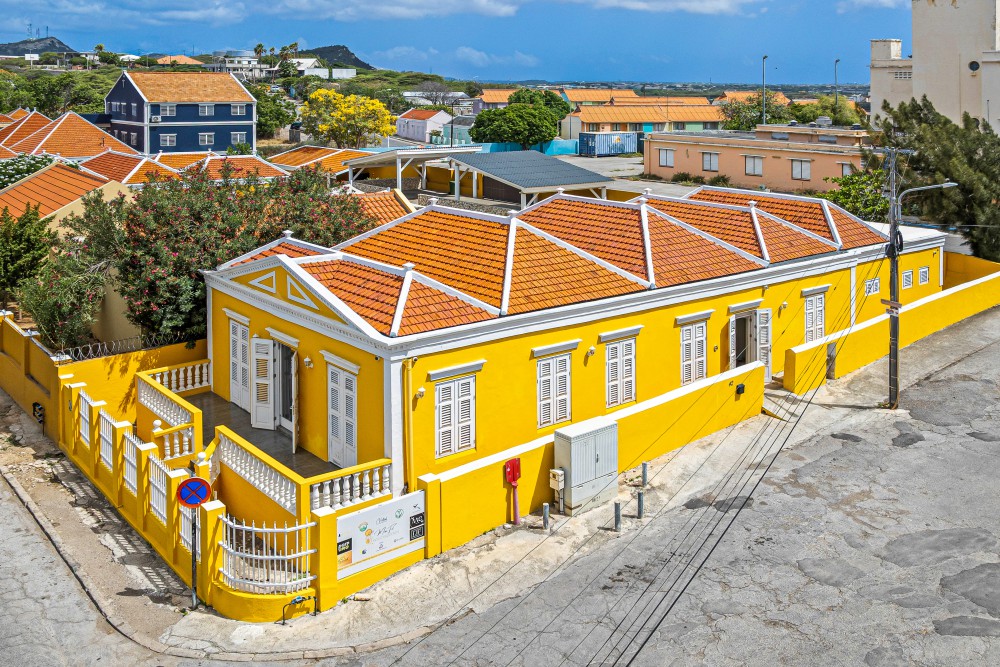
This part of Ser’i Otrobanda has attracted a growing number of young and innovative entrepreneurs in recent years. Villa Sixta is directly across from co-working complex The Triangle and neighbourhood restaurant Maira’s Kitchen, in an increasingly lively part of historic Otrobanda.
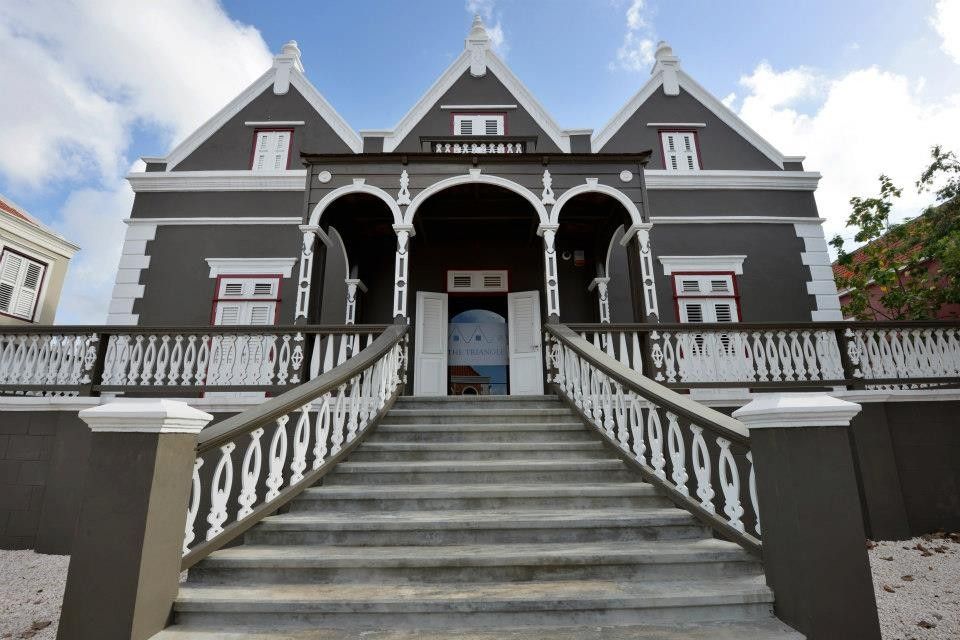
The elegant office space is accessed via one of Villa Sixta’s curved staircases, which leads to the balcony and main entrance. Inside, the entrance area opens onto two large shared office spaces, two private offices, and a separate glazed meeting room. The unit has separate restrooms and a practical galley kitchen.
Wooden flooring runs throughout the space, while a decorative wooden screen forms a distinctive architectural feature in the central office area. One of the private offices has its own small private balcony. The space has a floor area of 206 m² and comprises seven rooms, including two private offices, two shared offices, a meeting room, entrance area, kitchen, and restrooms.
There are two bathrooms, one kitchen, and one floor. The structure is of coral stone. It is available from 1 October 2026. The rent is XCG 7,250 per month, excluding OB. Villa Sixta combines a practical working environment with the character of a beautifully restored historic building in Willemstad.
The history of Villa Sixta began in 1855, when an enslaved mason named Herman was manumitted by former governor Rammelman Elsevier and given the surname Elsevijf. A skilled mason with a strong entrepreneurial spirit, Herman Elsevijf went on to build properties and trade in land.
Twenty years after gaining his freedom, he completed this elegant neoclassical building in Otrobanda, which he most likely designed himself. In 1888, Elsevijf sold the property to Isaac Martinus Dagobert, who named it Villa Sixta, possibly after his wife or one of his daughters.
After housing several families during the late nineteenth and twentieth centuries, Villa Sixta was acquired by Stichting Monumentenzorg Curaçao in 1999, when the building was in a dilapidated state. Following extensive restoration, Villa Sixta reopened in 2003.